
InBody at Hot Elevation Studios
Accurate, insightful data to track your progress & achieve transformative results
InBody Composition Analysis
Optimize Your Health with Body Composition Analysis
How are you tracking your fitness progress?
If you’re like most people, you step on your bathroom scale when you want to assess your health. But your bathroom scale is misleading!
Weight loss is not the same as fat loss. As we age, we naturally lose some of our heavy, dense muscle mass, and a lower number on the scale doesn’t always mean we’re in peak condition.
The key to physical fitness is losing excess body fat, not overall body weight. Instead of tracking how heavy you are, use body composition analysis to track how healthy you are.
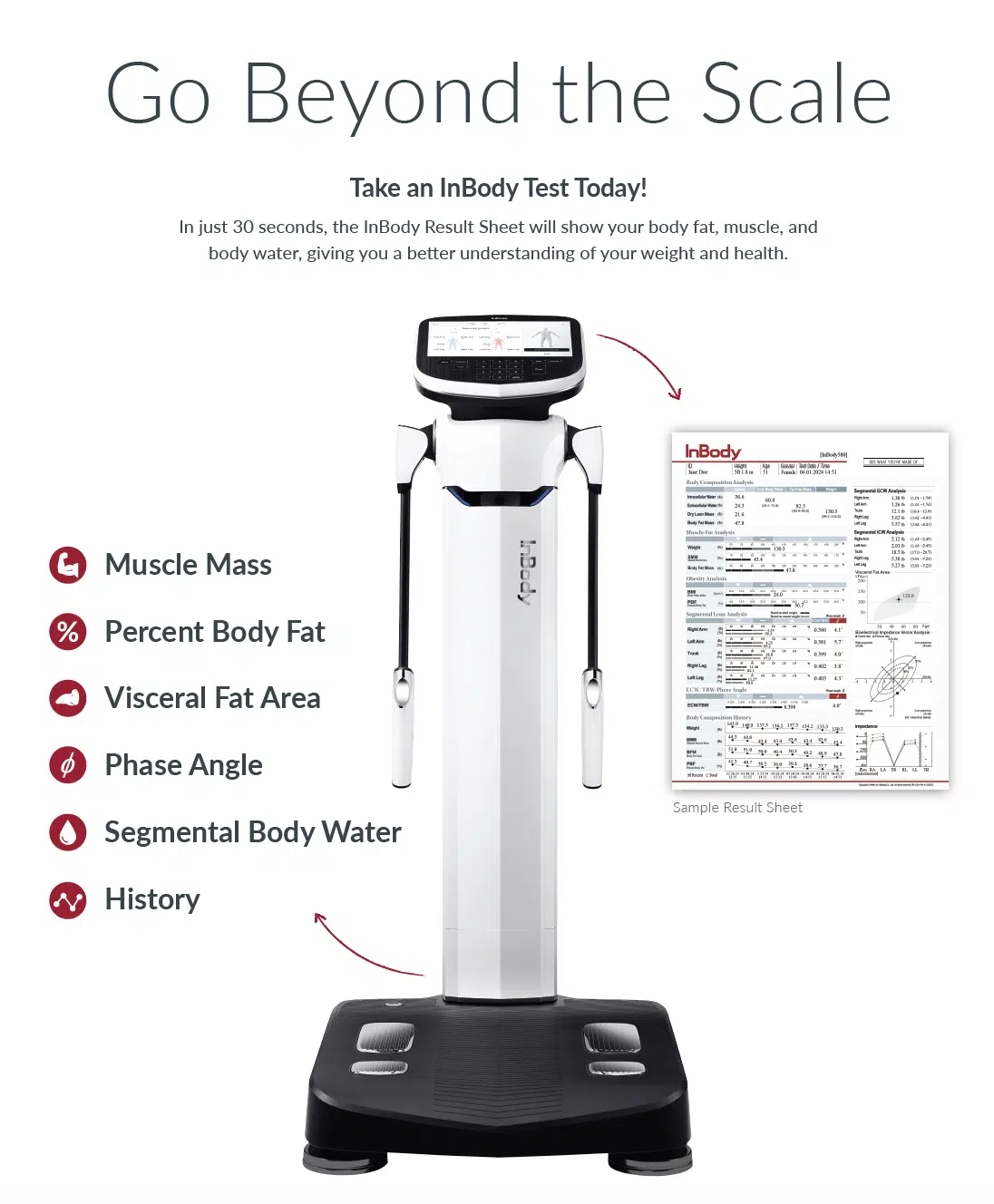
What InBody measures
- Skeletal Muscle Mass
- Percent Body Fat
- Segmental Body Water
- Visceral Fat Area
- Cellular health (via Segmental Phase Angle)
- Hydration levels (via the BIVA Graph)
- And more!
Take an InBody Test every two to four weeks to continuously monitor your progress towards your fitness goals.
HOW DO I PREPARE FOR AN INBODY SCAN?
Consistent testing conditions yield the most accurate results
Do:
Avoid:
We recommend testing every 2-4 weeks under the same conditions to accurately track your progress. For example, if you always take class before your scan, then take all your scans after class for consistency.
What you get
Body Composition Analysis: metrics such as body fat percentage, muscle mass, and visceral fat level, providing a detailed breakdown of your body composition
Basal Metabolic Rate (BMR): estimates the calories your body needs to maintain basic physiological functions at rest
Segmental Lean Analysis: insights into the distribution of muscle and fat in different parts of your body, allowing for targeted fitness and nutrition strategies
Body composition is used by health professionals to evaluate a person’s weight by breaking it down into its core components: fat, protein, minerals, and body water. It describes your healthy weight more accurately and provides a better glimpse into your overall health than traditional methods like BMI and weight.
Most diet and fitness goals focus on weight loss or gain, overlooking that two people of the same sex and body weight may look completely different from each other because they have different body compositions.
By differentiating between muscle and body fat, body composition removes the guesswork of determining what your weight fluctuations mean, be it muscle gain, body fat loss, or anything in between.
First steps to improve body composition
Start by measuring your body composition and setting a body composition goal.
Understand how many calories you need to achieve your personal goal. Protein is important for muscle growth and fat loss.
Physical activity is important for everyone. Adding resistance training can help challenge your muscles and help them get stronger.